CLOSING THE CIRCLE - A plastic project
by Hendrik Hackl
in collaboration with the dinosaur experts Lena Pappschek and Zsombor Hobaj
A journey from Jurassic Plankton to Mineral Oil. And from oil to plastic.
About the recycled PET bottle to a 3D-printed ichthyosaur.
From the Anthropocene to the Jurassic age and back again.
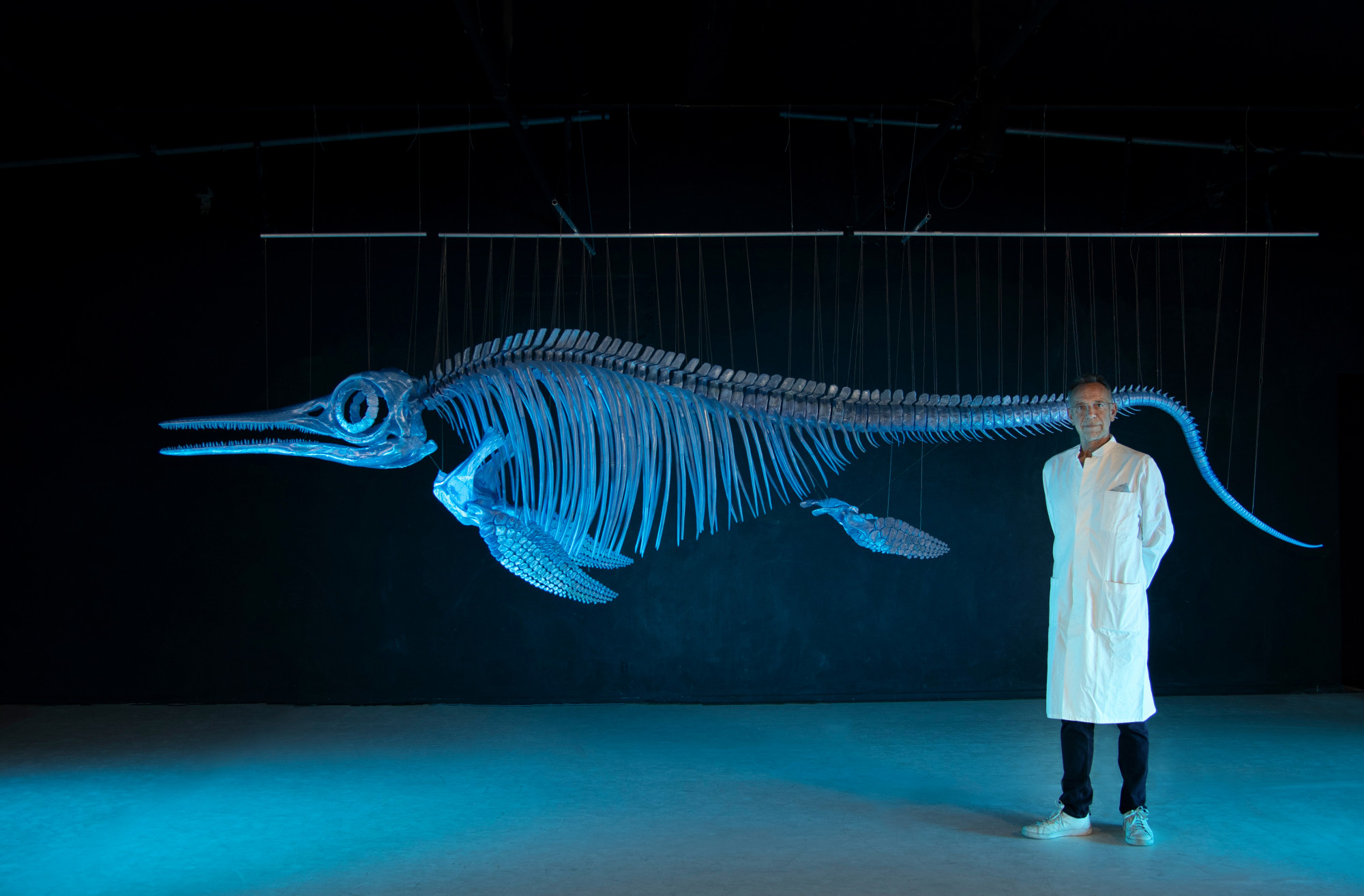
The artist with the PET - printed Ichthyosaur - 5 m long - 27 kg - 666 recycled PET bottles (Photo Elles Magermans)
Plastic and the Jurassic Sea
We have now arrived in the year 2025, the new millennium has only just begun yet it is already telling us one unpleasant story after another.
People are steadily being haunted by “remnants” of their supposed progress.
Tons and tons of plastic waste is floating in our seas and oceans all over the world, (even in the Arctic) being constantly washed up on our shores at high tide.
Floating in the water and taken by fish to be a source of food and eaten as “nourishment” - in seas and oceans which have been inhabited by living creatures since prehistoric times.
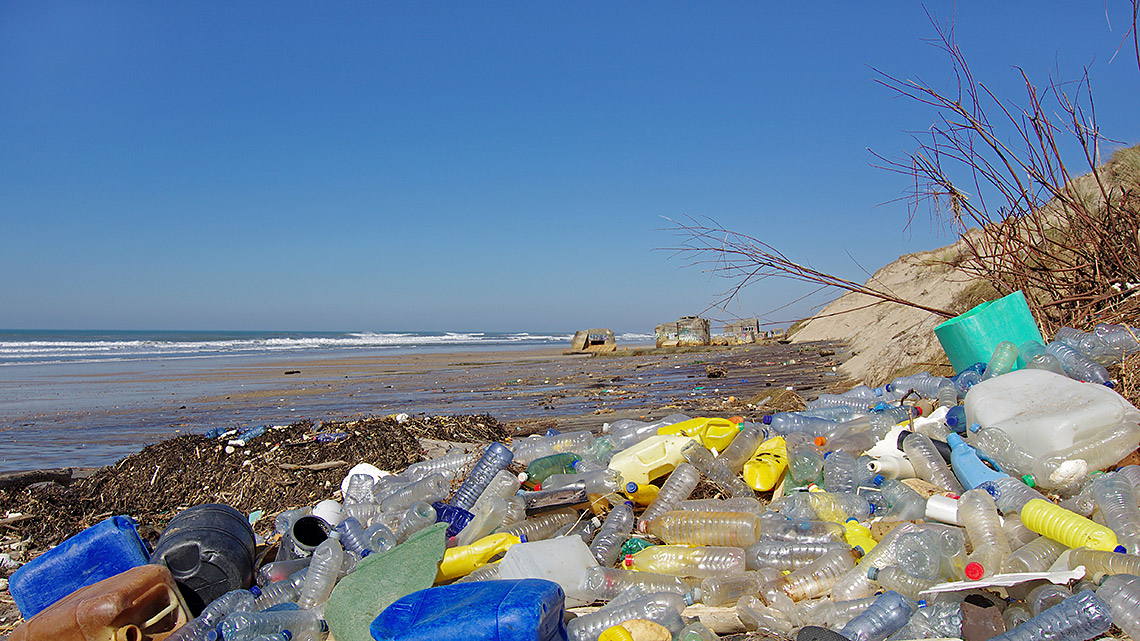
Plastic waste on the French Atlantic coast - Stockphoto
Floating in the water and taken by fish to be a source of food and eaten as “nourishment” - in seas and oceans which have been inhabited by living creatures since prehistoric times.
During the Jurassic period, it was home to plankton, crinoides, ammonites, mussels, fish, squids, and ichthyosaurs...
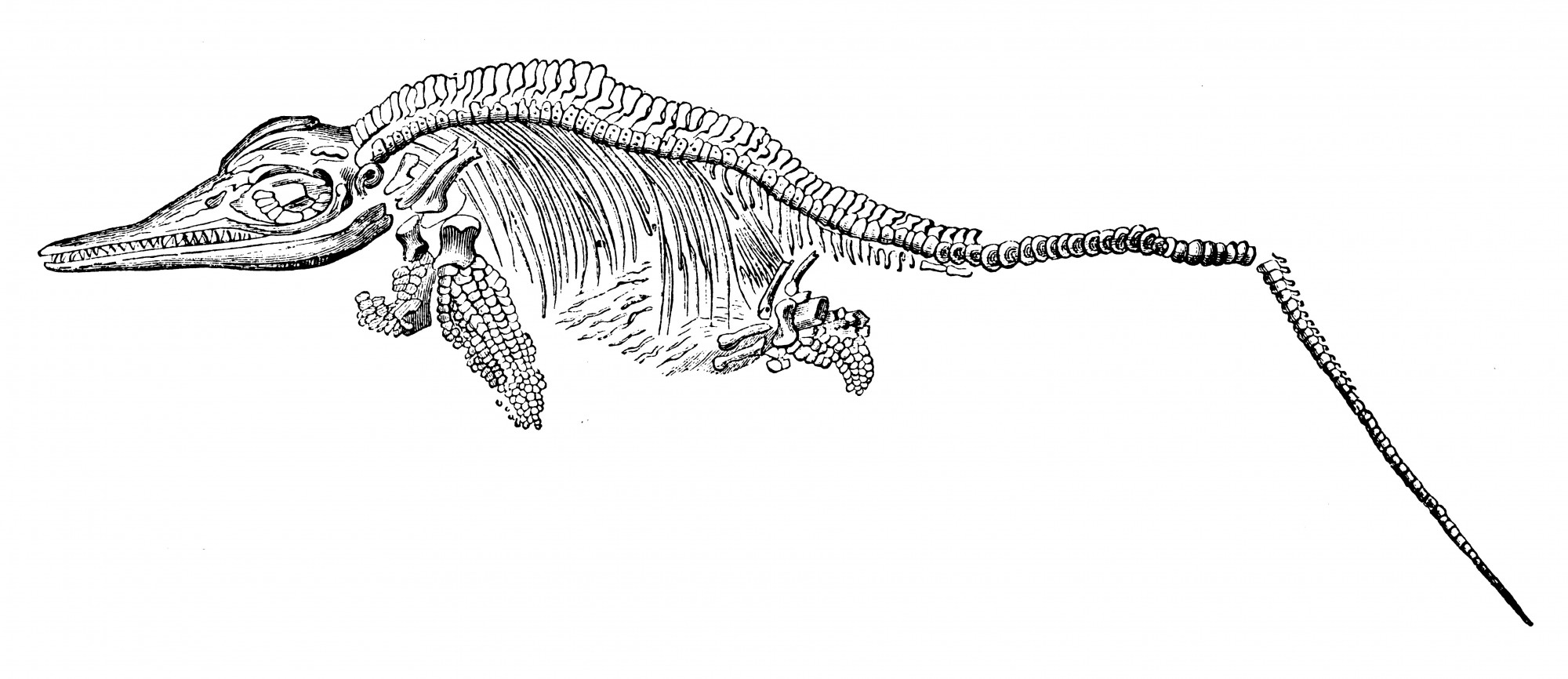
Ichtyosaur - historical drawing by Louis Figuier 1867
During this time, the fermenting plankton turns into petroleum—a fossil fuel—THE basic building block of plastic production, including PET bottles. 500,000,000,000 of these are produced worldwide every year!
Of this incredible number of PET bottles, more than 30% ultimately end up in the sea...
Plastic recycling
During a vacation in France, Hendrik Hackl collects disposable bottles washed up on the Atlantic coast every day... each bottle contains a fossil...
On the beach, he has a vision of turning these “bottle fossils” into a visible “fossil” again. A floating dinosaur from the Jurassic period. An ichthyosaur...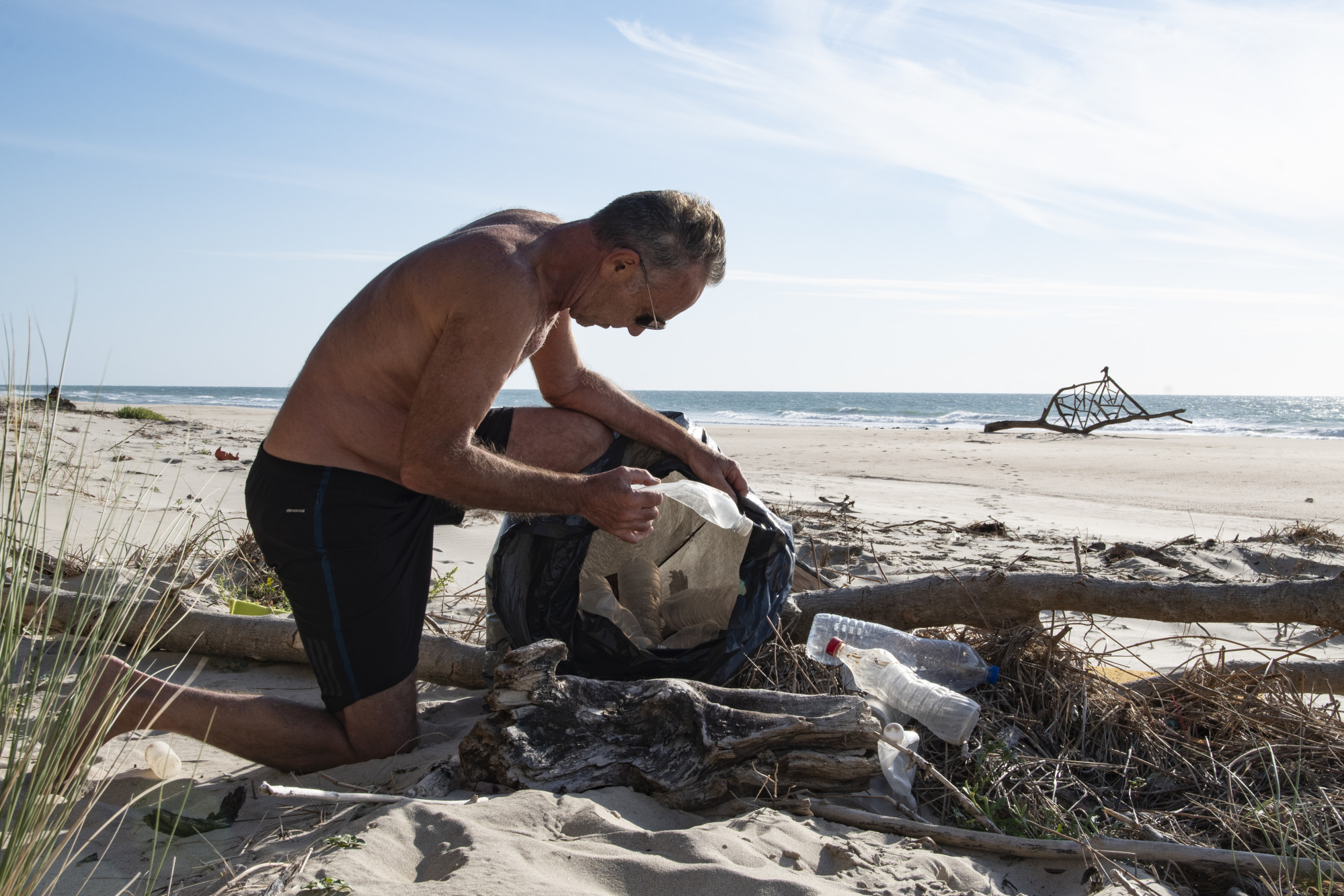
Hendrik Hackl collecting PET bottles at the Atlantic coast in France
The collected “raw material” is cleaned, then crushed, and the resulting granulate is combined using a melter to form a printable material - the filament.
This is how the PET bottle ends up in the 3D printer...
3D printing of the PET ichtyosaur skull

The return of the Ichthyosaur - CLOSING THE CIRCLE
This rPET filament is used to print a “modern” species of dinosaur. The result is, so to speak, the “missing link” between our throwaway society and prehistoric times.
The image of a 180-million-year-old sea creature—an ichthyosaur—is transformed into the 21st century. The fossil is reborn through the “converted” plankton of the Jurassic Sea and a 3D printer.
Each individual PET bottle-blue bone of the three-dimensionally printed dinosaur is suspended on thin nylon threads – its skeleton as a mobile – set in motion by the breath of passing people – swimming through our present day.
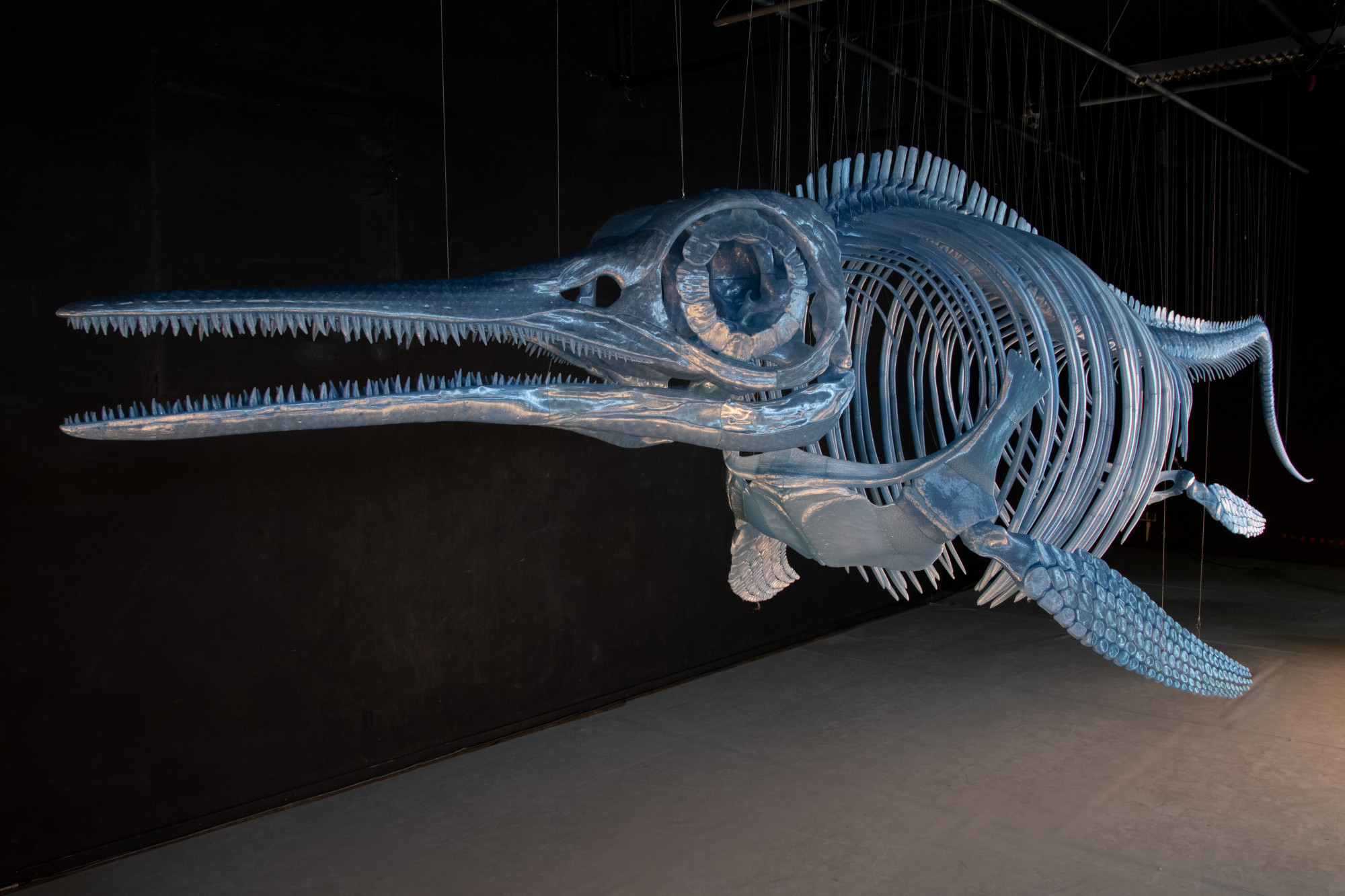
The PET - ichthyosaur - June 2024 - Photo Elles Magermans
Past and future exhibitions, publications, and awards
Mar 2024 Preview in Vienna DIE UNIKATEWELT
June 2024 Television report - Landesschau BW
Aug 2024 CLOSING THE CIRCLE becomes GREEN DEAL of the city of Mannheim
Oct 2024 Special exhibition MUNICH SHOW - (Munich Mineral Show)
Nov 2024 NATUR und MENSCH (Nature and Man) Museum - Freiburg
Nov 2024 TV report - Landesschau BW
Dec 2024 Fuchs Prize for social projects in Mannheim
Mar 2025 With the dinosaur into the future - Workshops for children - Mannheim
July 2025 Awarded the iDEAL 2025 environmental prize by the city of Mannheim
Oct 2025 Reiss-Engelhorn Museum - Mannheim
Apr 2026 Dortmund Natural History Museum
Jun 2026 Special exhibition - Mineral & GEM St. Marie-aux-Mines/F
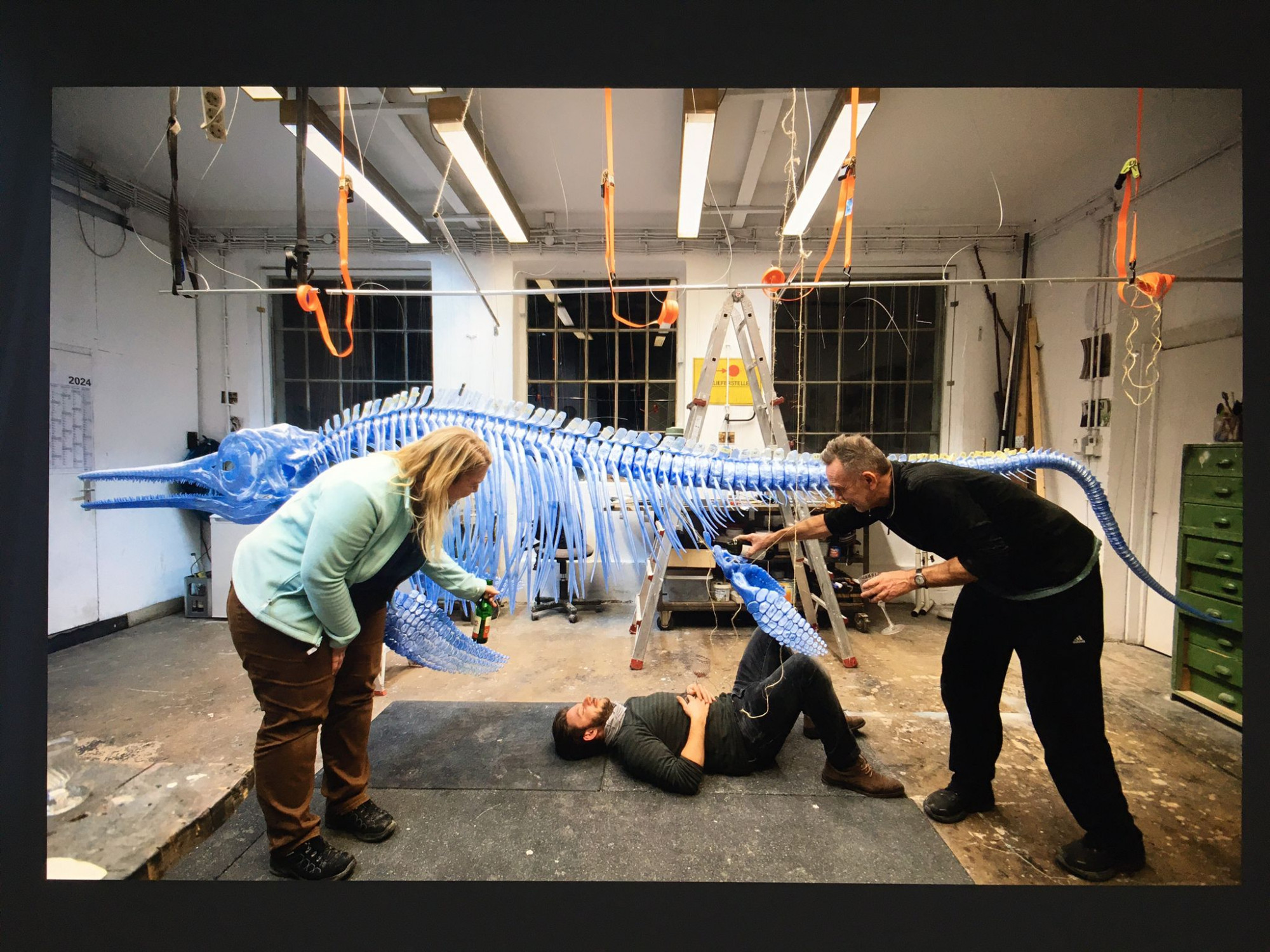
Lena, Zsombor and Hendrik after the first successful setup in the studio - Photo Elles Magermans